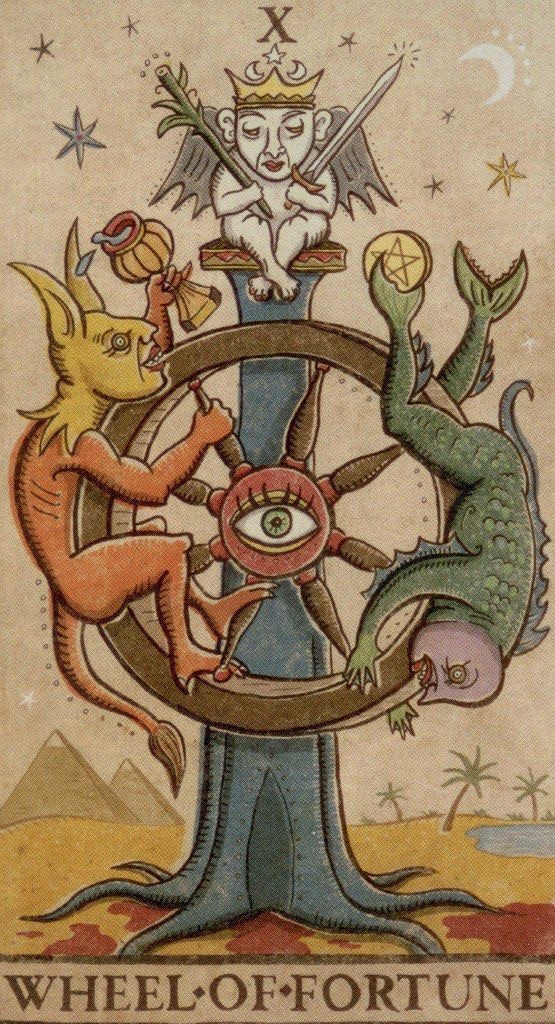
I have a wheel and I turn it so that what is low is raised high and what is up is brought down. You ascend? Fine! But you must acknowledge that it can’t be wrong for you to have to descend again. You were not unaware of how the wheel works.
-Fortuna, The Consolation of Philosophy, 523 ACE
Americans are so incredibly resistant to the idea that our fate is mostly out of our hands.
Doesn’t matter the topic, when I allege that…
-you can do everything “right” and still not get your preferred outcome
-most people are where they are as a result of income / ability level / genetics / systems of advantage and disadvantage / historical context / etc, far more than their choices
-shit just happens a lot of the time
People do not want to hear it.
They prefer a comforting, American myth. A myth that supports the ego, and quiets the troubling voice that whispers, “the floor could drop out from under your feet at any minute.”
They holler back, “not if I do all the right things.”
They look at folks facing challenges and think, “that could never be me. I make the right choices and work hard. Others deserve their challenges, and I deserve my ease.”
This feels much better than, “we are at the mercy of our societies and systems, our circumstances, the tide of history, the hand we’re dealt, the weather on Tuesday, the traffic on the ambulance route, the butterfly flapping its wings.”
Which is not to say that choices don’t matter. Choices matter a lot.
But often, when people make shitty “choices,” it’s because the only choices available to them are shitty.
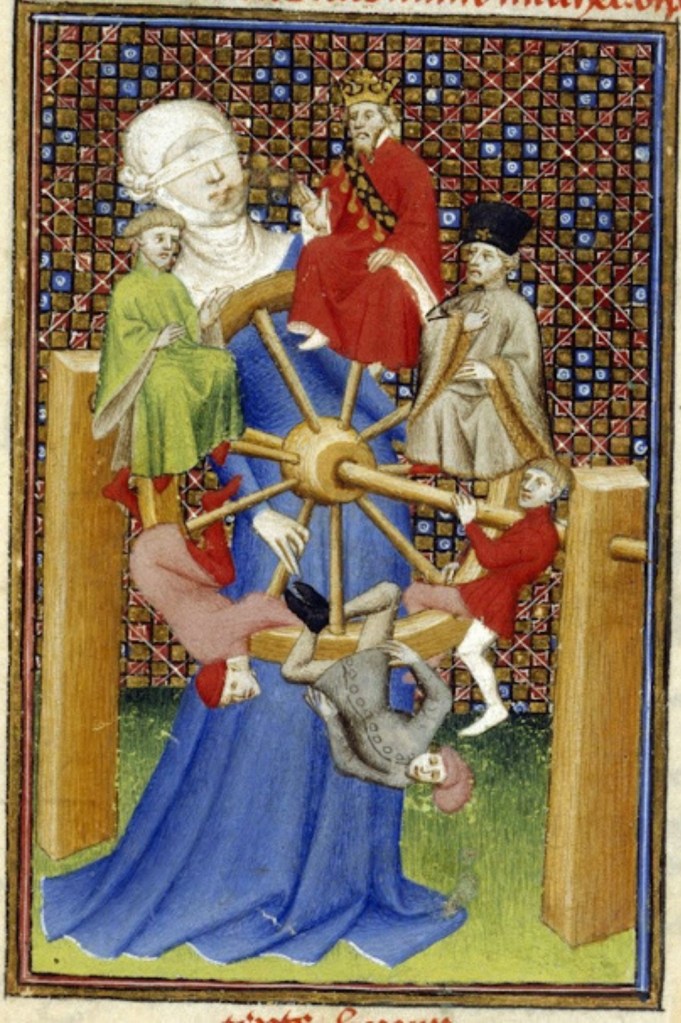
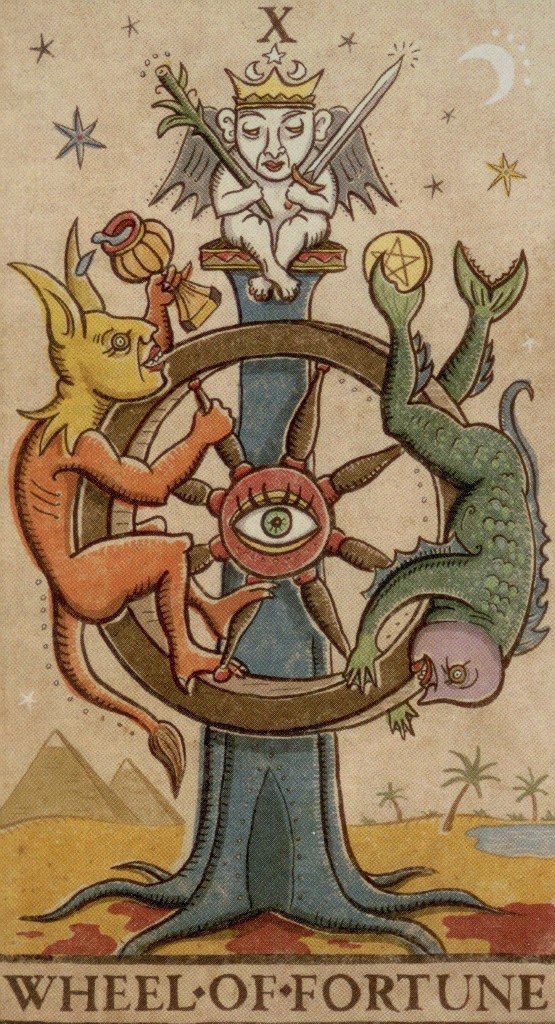
The ancient archetype of Fortuna, Lady Fortune, spinning her Wheel and playing games with our mortal lives, illustrates a very different attitude, one forged before modern life taught us the illusion of control. In this worldview, random chance, luck, and forces beyond our control alter every step of our path.
People who live in cultures that believe our fate is largely out of our hands have lower rates of depression and anxiety than those of us in individualistic, bootstraps, “master-of-your-own-fate” cultures.
Nevertheless, we as a society are deeply invested in preserving the same lie that harms us.
I believe the instant revulsion many Americans feel towards the idea of fate, chance, luck, or randomness shaping their lives is rooted in fear.
Anything to maintain that illusion of control.
As a tarot reader, one of the primary themes of my work is accepting our lack of control over others, outcomes, circumstances. This is the message that comes up, over and over, for so many of my clients.
So much of our anxiety comes down to a mad attempt to control every possible outcome.
It’s an impossible thing, but we’ve been taught for several generations that we can, should, and must try.
Am I ever advising anyone to give up, stop setting goals, stop making the best choices they can make? Never! Identify where you’re empowered and take action! It matters!
But our cultural obsession with individual control goes so deep. It’s in the way we see ourselves and others, how we parent, our work, our health, our economy, politics, religion and spirituality. It touches everything.
And it harms us. It’s a lie.
We can celebrate our accomplishments and acknowledge our failures. We can stand in judgment of others, congratulate ourselves, set goals, challenge ourselves, and make the best possible choices. We can work hard and earn things and follow instructions, and pat ourselves on the back.
That stuff is real. Accepting the reality that chaos is also real doesn’t take away anybody’s Blue Ribbon, no more than it absolves wrong-doers of responsibility or consequences.
But the floor *could* drop out at any minute. That’s just true.


Leave a Reply